
Choosing an industrial primer in Pune starts with the steel’s exposure, preparation grade, and intended topcoat, not with a generic “heavy-duty” label. You will be able to compare red oxide, zinc-rich, epoxy, and compatible primer systems, then specify application controls and supply documents that fit the project.
Key takeaways
- Select primer by ISO 12944-5 exposure category and durability target.
- Match primer chemistry to steel condition and preparation grade.
- Measure humidity, steel temperature, dew point, and dry-film thickness.
- Request technical data, safety data, batch details, and system compatibility.
Choose the primer by exposure category, not by product name
Choose the system against ISO 12944-5 corrosivity category, durability target, substrate, and service condition—not the label on the tin. An industrial primer for anti corrosive coating pune projects may suit atmospheric C3 or C4 steel yet fail in C5 exposure, immersion, buried steel, or chemical service.
| Option | Protection principle | Suitable use |
|---|---|---|
| Red oxide or zinc-phosphate | Inhibitive and barrier protection | Routine mild-steel fabrication in controlled C3 or selected C4 atmospheric service |
| Zinc-rich | Sacrificial protection from electrically connected zinc particles | Blast-cleaned steel in demanding atmospheric exposure, including specified C4 or C5 systems |
| Epoxy | Adhesion and barrier performance | Prepared steel where the complete system requires a strong, sealed foundation |
A zinc-rich primer only provides sacrificial protection when its zinc particles remain electrically connected and the film is correctly formulated, applied, and overcoated. Red oxide or zinc-phosphate is not equivalent to zinc-rich protection in severe exposure.
C5 environments demand a higher-build, fully specified system than ordinary C3 or C4 work. Immersion, buried steel, and chemical duty require product data and system evidence for that exact service; an epoxy primer is not automatically suitable for exterior exposure, immersion, or chemical duty, and ordinary epoxy can chalk under ultraviolet light.
Specify the complete system: primer, compatible intermediate coat, and topcoat. The final corrosion-protection result depends on their compatibility, film thickness, preparation, and curing—not on the primer alone. Expecting one primer to carry the whole duty is how early rust returns.
Match the primer to the steel condition and preparation grade
Primer choice follows the steel condition: new mild steel can take a standard anti-corrosive primer, while old paint, galvanised steel, and partial rust need a compatible repair system.
| Condition | Suitable approach | Required preparation |
|---|---|---|
| New mild steel | Red oxide, zinc-phosphate, or epoxy primer | Degrease, remove mill scale, abrasive-blast where specified, and remove dust |
| Fully blasted carbon steel | High-performance epoxy or zinc-rich primer | Specify Sa 2½ for high-performance work; specify the target profile |
| Previously painted steel | Compatible maintenance primer | Remove loose coating, feather sound edges, clean, and complete a compatibility test |
| Galvanised steel | Galvanising-compatible or adhesion primer | Degrease, remove white rust, lightly abrade or sweep-blast, then follow the approved system |
| Tightly adherent aged coating | Repair primer approved over the existing coating | Clean and abrade the sound film; do not assume a blast-steel primer will bond |
| Rusty or spot-repair areas | Local repair primer matched to the existing system | Remove loose rust to St 2 or St 3, feather edges, dust off, and test compatibility |
Put the preparation grade in the purchase specification: Sa 2½, Sa 2, St 2, or St 3 under ISO 8501-1. A primer designed for freshly blasted steel can fail over old paint or partial rust, so maintenance work needs a written repair procedure or compatibility test.
Measure the blast profile under ASTM D4417 with replica tape or comparators. Deep profiles, pits, welds, and sharp edges need extra film build or a compatible stripe coat because spray application leaves peaks and discontinuities thin. A Pune anti corrosive primer buyer should also require degreasing, mill-scale removal, loose-rust removal, and dust removal before priming.
Control Pune humidity, condensation, mixing, and application
Pune monsoon primer failure starts with condensation, not a label. Measure steel temperature, air temperature, and relative humidity at the workface; calculate dew point using ISO 8502-4 as the condensation-risk reference. Keep steel at least 3 °C above dew point unless the product data sheet sets a stricter limit.
| Site control | Required action | Failure prevented |
|---|---|---|
| Steel temperature | Recheck before and during coating as temperatures change | Condensation and poor adhesion |
| Air temperature | Keep within the product’s stated application range | Slow drying or curing failure |
| Relative humidity | Keep below the product’s stated maximum | Delayed drying and soft film |
| Dew point | Stop when the steel-to-dew-point difference is under 3 °C | Moisture trapped beneath primer |
After blasting, apply primer before flash rust appears; remove it and reblast if it develops. Store unopened packs covered, dry, and within the stated storage-temperature range. Protect wet primer from rain and condensation, while ventilating without drawing humid outside air across the coating.
- Mix base and hardener in the stated ratio, then observe the required induction time.
- Use only the approved thinner within its stated limit.
- Spray production coats for uniform build; reserve brush or roller for stripe coats, edges, small repairs, or products that permit them.
Track pot life, curing time, and minimum and maximum recoat intervals. Adding thinner after pot life may ease application but does not restore curing performance. Discard mixed leftovers as directed for the industrial primer Pune project.
Specify the full coating system and verify film build
Specify the primer, intermediate coat, topcoat, stripe coat, target film builds, and application conditions as one system. Do not assume that a primer compatible with steel is compatible with every finish.
- Obtain written compatibility confirmation for the primer with synthetic enamel, epoxy, polyurethane, and any other proposed topcoat. Check the recommended surface preparation, maximum recoat interval, curing state, and approved thinner before application.
- Treat lifting, wrinkling, solvent attack, poor adhesion, trapped solvent, or a soft film as evidence of wrong or premature recoating. Stop, identify the cause, and obtain a repair procedure rather than applying another coat.
- Require the current technical data sheet to state wet-film thickness, dry-film thickness, spreading rate, minimum and maximum recoat interval, curing temperature, and thinner limits. Record the actual site temperature because recoat windows change with temperature.
- Reject coverage calculations based only on theoretical litres per square metre. Blast profile, welds, edges, pitting, stripe coats, and spray loss increase consumption and must be included in the quantity estimate.
- Apply a compatible stripe coat to edges, welds, corners, bolt heads, and other locations where spraying leaves thin film. Count that coat within the specified total dry-film thickness.
- Measure dry-film thickness under SSPC-PA 2, using its required number and distribution of readings for the coated area. One spot measurement cannot prove compliance.
- Keep holiday testing separate from DFT and adhesion testing. Select low-voltage wet-sponge testing or high-voltage testing according to coating thickness and cure; excessive voltage can damage a thin or inadequately cured film.
Compare Pune supply routes, documents, and project support
Treat an industrial coating supplier Pune listing as a starting point, not proof of technical fit. Compare the route against delivery risk, replenishment, batch control, and support at your site.
| Route | Practical advantage | Checks before ordering |
|---|---|---|
| Local Pune distributor | Faster delivery and simpler replenishment | Confirm stock age, pack sizes, same-batch availability, and local technical support |
| Transported Nagpur supplier | Wider manufacturer coordination and scheduled dispatch | Confirm lead time, transport protection, storage temperature, freight responsibility, and replacement process |
| Project-order arrangement | Primer and compatible topcoat can be planned together | Confirm production schedule, quantity commitment, batch continuity, and delivery milestones |
MUNDLE COATINGS & CHEMICALS PVT LTD may support Pune through a distributor, scheduled transport, or a project-specific order; ask which route applies to your job rather than assuming local availability.
Obtain the current technical data sheet and safety data sheet before purchase, plus the batch number, manufacturing date, mix ratio, induction time, pot life, approved thinner, surface-preparation grade, application-temperature limits, recoat window, and recommended topcoat. Confirm that every primer and compatible topcoat batch can arrive together.
Ask for a written system recommendation when the work involves galvanised steel, existing paint, immersion, C5 exposure, or partial repairs. Compare documented technical fit and site support, not “anti-corrosive” on the label or litres-per-square-metre alone.
Related products
 | Indiglow Paints We are the best manufacturer and supplier of Anti-corrosive Metal Primer in Nagpur. View product → |
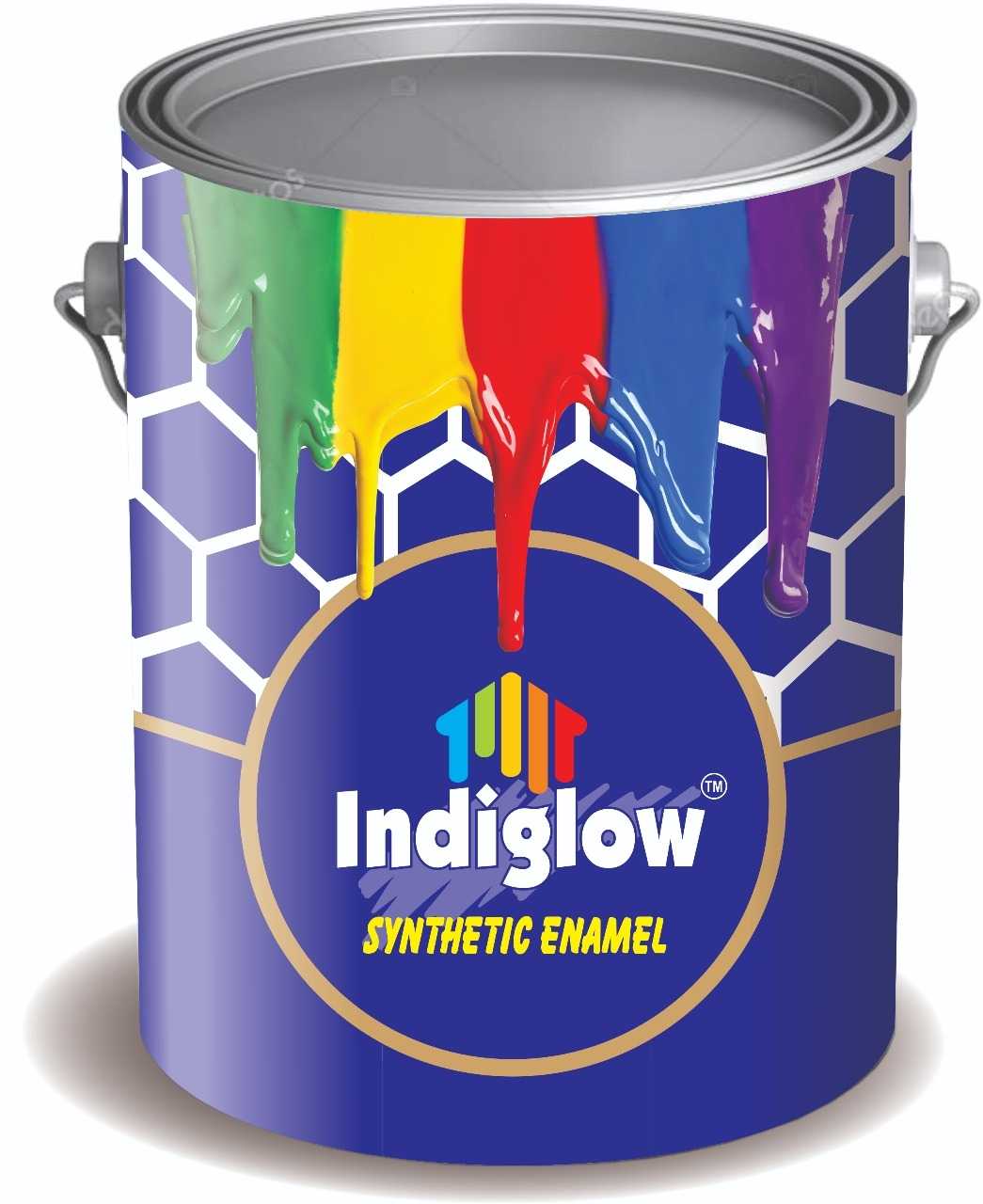 | Indiglow Paints We are the manufacturers and supplier of Anti Corrosive Paints in Nagpur. View product → |
Frequently asked questions
How do you choose an industrial primer for anti corrosive coating in Pune?
Choose it by ISO 12944-5 corrosivity category, durability target, substrate, and service condition—not by product name. Separate atmospheric C3 or C4 work from C5, immersion, buried steel, and chemical service.
Which steel preparation details should you match to the primer?
Check the steel condition, existing rust, contamination, and specified preparation grade before selecting the primer. Confirm whether the system requires abrasive blasting, power-tool cleaning, or another preparation method.
How should Pune humidity and condensation affect primer application?
Measure relative humidity, steel temperature, and dew point before and during application. Do not coat when condensation can form on the steel, and follow the product’s specified mixing, pot-life, temperature, and recoat limits.
How can you verify that an anti-corrosive coating system has enough film build?
Specify the complete system—surface preparation, primer, intermediate coat, topcoat, dry-film thickness, recoat window, and repair method. Measure dry-film thickness with a calibrated gauge and record the results.
What should you request from an industrial coating supplier in Pune?
Request the technical data sheet, safety data sheet, batch number, manufacturing details, coverage guidance, compatibility statement, application limits, and documents supporting the specified coating system.
Related items
 | Indiglow Paints We are the best manufacturer and supplier of Synthetic Enamel & Primer in Nagpur. View service → |
| Indiglow Paints Synthetic Enamel And Primer We are the best manufacturer and supplier of Synthetic Enamel & Primer in Nagpur. |


