
A durable painted wall depends on the layers beneath the visible colour. You will learn how to inspect the substrate, apply and dry putty correctly, match the primer and emulsion to Nagpur conditions, and check the finished system before approving the work.
Key takeaways
- Repair dampness, cracks and loose plaster before applying wall care putty.
- Use thin, even putty coats and allow each coat to dry before sanding.
- Control dust, heat and monsoon moisture during the emulsion application process.
- Specify primer, putty, sealer and emulsion as one complete coating build-up.
Start with the Wall, Not the Putty
Check the wall before buying putty. For wall preparation for emulsion, inspect new cement plaster, old paint, concrete and gypsum board for damp patches, efflorescence, chalking, flaking paint, algae, oil, dust, hollow plaster, hairline cracks, deep cracks and uneven areas.
- Allow new cement plaster to cure and dry. Do not coat plaster that is still releasing moisture.
- Remove loose plaster, weak paint, chalking material and laitance, the weak cement-rich film left on a concrete or plaster surface.
- Clean efflorescence, algae, grease, oil and dust. Salts left behind can return through the finish.
- Repair active leakage, recurring dampness, hollow plaster, deep cracks and moving joints before coating. Use the appropriate masonry repair or flexible treatment; ordinary putty will re-crack over movement.
- Apply wall care putty in Nagpur only after the substrate is sound, clean and dry.
Moisture checks are more reliable than surface colour. Nagpur’s heat can dry the surface skin while deeper plaster remains wet, leading to blistering, alkali marks, efflorescence and lost adhesion; use a moisture meter or documented site check.
Ordinary putty fills minor pores and smooths small waviness. It is not a structural repair compound, nor is it suitable for deep or moving cracks. After repairs, putty, sanding and dust removal, the wall is ready for the primer stage.
Know Which Layer Does Which Job
Wall care putty and emulsion work as a sequence, not substitutes: putty levels and fills pores, primer controls suction and adhesion, and emulsion supplies the visible protective finish. Wall care putty in Nagpur must dry fully after application because cement-based putty can retain moisture beneath a rapidly dried surface skin.
| Layer | Main job | What goes wrong if omitted |
|---|---|---|
| Wall care putty | Levels waviness and fills pores | Texture and minor defects remain visible |
| Primer | Controls unequal suction across plaster, repairs, putty and sound paint | Patchy colour, sheen and adhesion develop |
| Emulsion | Provides the decorative, protective finish | The wall remains unprotected and unfinished |
Cement-based putty suits sound cement plaster and selected masonry after cleaning, repair and proper preparation. Ready-mixed or polymer-based fillers suit specified interior repairs, but fail when exterior exposure, alkalinity or moisture exceeds the product limits.
Use the substrate-specific product data sheet for new plaster, previously painted walls, concrete and gypsum board. New plaster must be cured and dry; remove weak or chalking paint before filling, and do not assume one putty suits every board or concrete surface.
Primer belongs after putty has hardened, been sanded and cleared of dust. Emulsion cannot replace levelling or suction control: applying it directly over uneven or absorbent surfaces leaves defects and uneven sheen visible.
Apply Putty in Thin, Controlled Coats
Use this wall preparation for emulsion sequence: mix the putty correctly, apply controlled coats, allow complete drying, sand, and remove every trace of dust before primer.
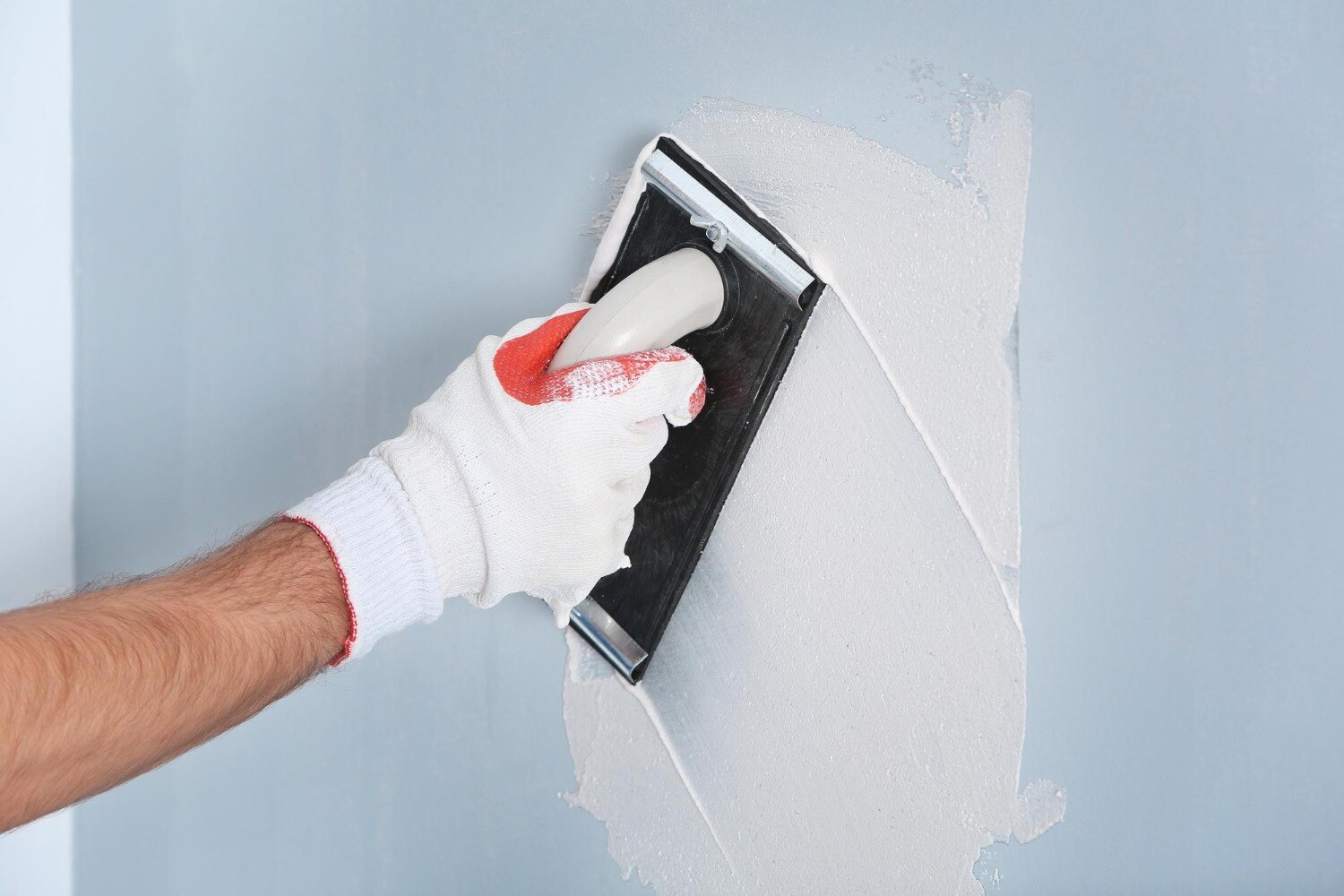
1. Clean the putty knife, trowel, mixing vessel and water container. Add water in the ratio stated by the manufacturer, not an improvised measure. Mix until the paste is smooth and lump-free, then apply it evenly with a putty knife or trowel.
2. Keep each coat thin. A heavy build can trap moisture, shrink, crack, stay soft at the centre and become difficult to sand. One coat is enough when the surface is level and free of pinholes; apply a second coat only for pinholes, remaining undulations or visible trowel marks.
3. Follow the technical data sheet for maximum thickness, curing and drying intervals. Do not use a fixed generic time: Nagpur’s hot weather can dry the surface skin while deeper putty remains wet, whereas monsoon humidity slows internal drying. The wall care putty emulsion for process in Nagpur must follow actual hardness and dryness.
4. Sand only after the putty has hardened, then remove all powder before primer. Residual dust causes roller drag, pinholing, weak adhesion and uneven sheen. Primer applied over that powder creates a fragile layer beneath the finish.
Control Nagpur’s Heat, Dust and Monsoon Moisture
The emulsion application process in Nagpur must follow the wall’s condition, not the calendar. Apply only to a dry, clean, primed surface free of loose putty. Heat can dry the surface skin while deeper cement putty remains wet, while monsoon humidity slows drying.
- Remove every trace of sanding dust, then apply the compatible primer. Do not apply emulsion directly over dusty, soft or uncured putty.
- Apply the first emulsion coat after the primer reaches the manufacturer’s stated recoat condition.
- Apply the second coat within the stated recoat window, using the same tool and technique across the continuous wall.
Work in shade with enough ventilation for drying, while staying within the emulsion manufacturer’s temperature and relative-humidity limits. Stop during rain, condensation or very humid periods. Do not coat a sun-heated wall: rapid water loss causes lap marks, poor flow, roller marks and visible overlap lines.
Mix water-based emulsion uniformly and add water only at the stated ratio. Excess water reduces hiding, binder deposition, scrub resistance and film build; insufficient dilution increases roller texture. Box compatible batches together to reduce shade variation.
For a wall care putty emulsion for process in Nagpur, first make a representative test panel using the actual substrate, putty, primer and emulsion. After drying, inspect adhesion, pinholes, sanding scratches, colour and sheen uniformity, plus alkali or water marks, before releasing the full area.
Choose and Specify the Complete Coating Build-Up
Compare the complete coating build-up, not the emulsion name. Your specification must connect the substrate, wall care putty, primer and emulsion as one tested system.
| Setting | Main exposure | Selection focus |
|---|---|---|
| Interior | Dust, cleaning and variable humidity | Choose putty and emulsion for the substrate, cleaning demand, colour change and expected sheen |
| Exterior in Nagpur | Intense heat, monsoon rain, airborne dirt and repeated wet-dry cycles | Confirm exterior suitability, water resistance, alkali tolerance and resistance to weathering |
Before purchasing wall care putty in Nagpur, ask for the technical data sheets and batch details covering substrate condition, putty type, allowable coat thickness, curing and drying requirements, primer compatibility, emulsion dilution, coverage and recoat window. Require written compatibility guidance; comparing emulsion names alone can pair an unsuitable primer or putty with the finish.
Treat coverage as indicative, not guaranteed. Roughness, porosity, colour changes, dilution and application method alter actual consumption. Excess dilution reduces hiding, binder deposition and film build, while excessive putty thickness can trap moisture, shrink or crack.
Approve a representative test panel containing the actual substrate, putty, primer and emulsion. Inspect it after drying for adhesion, pinholes, sanding scratches, colour and sheen uniformity, and alkali or water marks.
MUNDLE COATINGS & CHEMICALS PVT LTD can help commercial buyers discuss a documented build-up for distribution or project use, but the test-panel result and written system data should decide.
Related products
 | Indiglow Paints We are the best manufacturer and supplier of Exterior Wall Primer in Nagpur. View product → |
 | Indiglow Paints We are the best manufacturer and supplier of Interior Wall Primer in Nagpur. View product → |
Frequently asked questions
What should you inspect before applying wall care putty?
Inspect cement plaster, concrete, old paint and gypsum board for damp patches, efflorescence, chalking, flaking paint, algae, oil, dust, hollow plaster, cracks and uneven areas. Fix these defects before applying putty.
What job does wall care putty perform before emulsion?
Putty fills minor surface pores and shallow imperfections, creating a smoother base. It does not replace damp-proofing, crack repair, primer or the emulsion finish coat.
How should you apply wall care putty before emulsion?
Apply thin, controlled coats over a clean, sound surface. Let each coat dry, sand lightly to remove ridges and dust the wall before applying primer and emulsion.
How does Nagpur’s climate affect wall preparation and painting?
Heat can shorten working time, dust can contaminate wet coats and monsoon moisture can delay drying or cause defects. Schedule work during stable weather and keep surfaces, tools and materials dry and clean.
Related products
 | Indiglow Paints We are the best manufacturer and supplier of Interior & Exterior Emulsions in Nagpur. View product → |
 | Indiglow Paints has excellent coverage, good water resistance property. We are the manufactures and supplier of 2G exterior emulsion in Nagpur. View product → |
 | Indiglow Paints has smooth finish, more coverage and durable. We are the manufacturer and supplier of Trend Line Interior Emulsion in Nagpur. View product → |
 | Indiglow Paints We are the best manufacturer and supplier of Premium Exterior Emulsion in Nagpur. View product → |